
Thursdays, April 9, 16, 23 & 30, 2026
7:30 PM
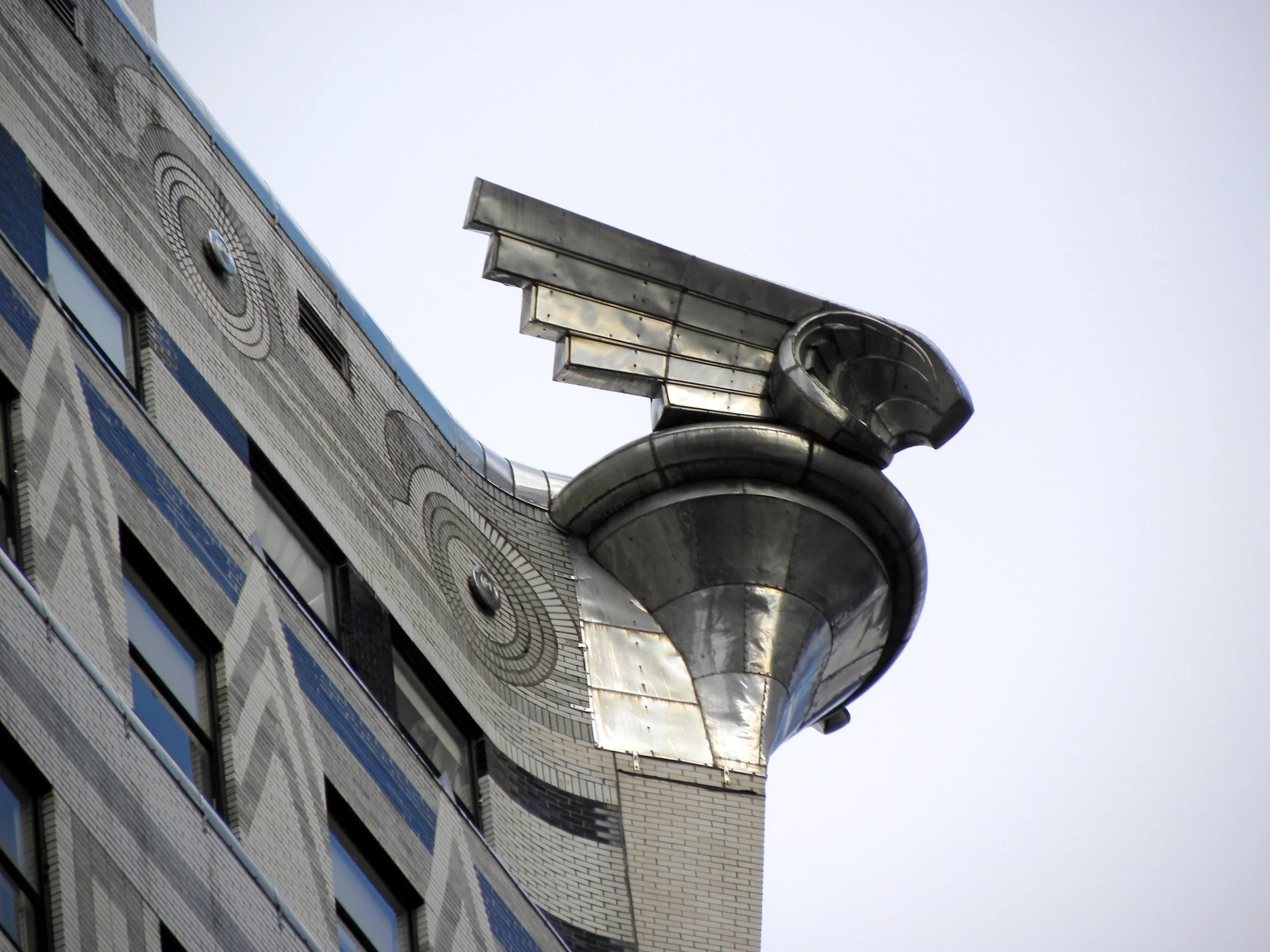
Art Deco, a structured, geometric, and elegant aesthetic, is strongly identified with urbanism, electricity, and modernity. An extension of early 20th century Art Nouveau, it gained full expression in the 1920s before morphing into 1930s Streamlined Moderne. Deco’s refined stylized forms appealed to architects, decorators, and manufacturers, who used new exotic and synthetic materials to produce luxury products, often with limited output. Nonetheless, Art Deco embodies a vibrant era marked by a thirst for novelty, speed, exoticism, and freedom. It touched every field of creation, from architecture and transportation, to furniture, fashion, jewelry, and graphic arts. Join Architectural Historian Diane Kane for a 100th Anniversary overview of the style, highlighting Art Deco’s Jazz Age expression in America. Discover how, from its origins in Paris, uniquely local identities in New York, Los Angeles, and Miami, it developed under the influence of high finance, radio, film, flappers—and cocktails!
Thursday, April 9: Paris
Due to its 1925 Exposition Internationale des Arts Décoratifs et Industriels Modernes, Paris is often credited as the birthplace of Art Deco. Known as the City of Lights, its sophisticated urban lifestyle and historical association with cutting edge art and architecture made Paris an international magnet. In the aftermath of World War I, creative designers and intellectuals flocked to Paris. Receptive to new and imported materials and exotic designs, they incorporated motifs from Africa, Asia, Mesoamerica—and especially Egypt—in meticulously crafted luxury items. This first lecture in the series explores Art Deco’s popularity during the waning days of colonialism and rise of modernism.
Thursday, April 16: New York
A burgeoning hub of international trade, New York invented the defining icon of Art Deco architecture—the ziggurat-formed skyscraper. This result of a 1916 zoning requirement enabled light to penetrate at street level in the forest of the ever taller buildings demanded by high finance. Housing offices, apartments, restaurants, boutiques, and nightclubs, resplendent with Art Deco art, furniture, and fashion, and highlighted in glowing neon, these buildings epitomized the bustling energy of Gatsby Era America. This race to the top produced an outstanding collection of distinctive skyscrapers, culminating in the Empire State Building of 1935.
Thursday, April 23: Los Angeles
When everyone is an immigrant and anything is possible, fantasy and reality collide, overlap, and blur. Home to the incipient film, oil, and aircraft industries, Los Angeles, with its sunny weather and varied topography, attracted an international crowd of risk-taking entrepreneurs and bohemians. Flat plains were quickly gobbled up by film studios, outdoor back lots, and film support industries, all tied together by a sprawling road network traversed by automobiles. Art Deco movie palaces and glamorous lifestyles associated with—and glorified by—the film industry spread Art Deco fashion, interiors, and design across the country.
Thursday, April 30: Miami
With over 800 buildings in the Streamline Moderne style, Miami Beach hosts the highest concentration of Art Deco buildings in the world. Sadly, the style’s origins and uniformity came about as a response to the Great Miami Hurricane of 1926 that left 25,000 people homeless. Comprising seasonal hotels, commercial strips, and small apartments, the quickly rebuilt area epitomized the optimistic futurism extolled at the 1933 Chicago and 1939 New York World Fairs. Originally developed for middle-class seasonal tourists, this internationally famous tropical playground materialized into a cohesive urban resort that was neither centrally planned nor haphazardly built. Its prevailing non-traditional architecture charted a path toward mid-century modern, locally known as MiMo (or Miami Modern).
About Diane Kane
A specialist in 19th and 20th century American architecture and urban planning, Dr. Kane has taught Western and American art and architectural history and planning to both professional and general interest audiences for over 35 years. Institutions include the NewSchool of Architecture & Design, Design Institute of San Diego, San Diego State University, Cal Poly Pomona, UC San Diego, and UCLA Extension. Retired since 2007, she has travelled the world, visiting all 50 states and over 110 countries. This has sparked an interest in non-Western architecture and cross-cultural transference and innovation through lectures at Osher Institute of Lifelong Learning. In 2024, Dr. Kane received a SOHO Lifetime Achievement Award for her work in preservation and planning and a Jewel Award from the La Jolla Historical Society for her work on the La Jolla Park Coastal Historical District's nomination to the National Register of Historic Places.
Series Tickets: $60/80
The lectures will be in person at the Athenaeum Music & Arts Library. There are no physical tickets for these events. Your name will be on an attendee list at the front door. Doors open at 7 p.m. Seating is first-come; first-served. Priority seating will be given to Donor level members and above.
Ticket Confirmation Notice:
Your reservation is not complete until you receive an email confirmation. If you do not receive a confirmation email, your tickets have not been reserved. Please check your inbox and spam/junk folder or contact us at info@ljathenaeum.org or (858) 454-5872 to ensure your booking is finalized.
Thank you!